 2023
2023- 2022
- 2021
- 2020
- 2019
- 2018
- 2017
- 2016
- 2015
- 2014
- 2013
- 2012
- 2011
- 2010
- 2009
- 2008
- 2007
- 2006
 2005
2005 Shell Acoustics
- Context Menus
- Security Lecture
- Unfortunate Typo
- Logging Out
- Switch
- Through the Looking Glass
- Scotland Video
- Comma Separated Values
- OU-M880 (Soft Eng)
- Cycling Britain
- Hidden Costs
- Hiring
- Golden
- Style vs Substance
- Bess
- Ajax Content
- DHTML Client
- Over There
- Content Hijacking
- Raw Statistics
- Trying to Fail
- SETI@home 2500
- Security Separation
- Gamma Ray Bursts
- Fishy Behaviour
- Moo Browser
- Caption this Photo
- All Good Things
- Dalek
- Moo Direction
- Open University
- OU-M865 (Projects)
- OU-M876 (Data)
- OU-M886 (Security)
- OU-M878 (Objects)
- OU-M874 (Java)
- OU-M873 (UI)
- Einstein's Riddle
- Glowing Books
- Hogmanay
- 2004
- 2003
- 2002
Shell Acoustics
30 December 2005
![[microphone in a conch shell]](/news/2005/shell.jpg) When one listens to a shell, where does the "sound of the ocean" come from? As a child I'd been told that it was actually the sound of blood-flow within one's ear being reflected back. A quick search of the net appeared to confirm this explanation.
When one listens to a shell, where does the "sound of the ocean" come from? As a child I'd been told that it was actually the sound of blood-flow within one's ear being reflected back. A quick search of the net appeared to confirm this explanation.
But it didn't make a lot of sense. Why would the sound be uniform? If it were blood-flow, wouldn't it surge in synch with one's heart-beat? To test this, I stuck the microphone from my computer's headset into a conch shell. Then I recorded the sound when the shell was pressed against my ear, when the shell was pressed against a leather wallet, and finally a record of the ambient background noise. As one can see from the wave patterns below, there was no significant difference in the sound between the two shell recordings, and a significant difference between the shell recordings and the background.
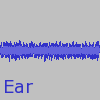
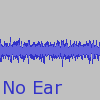
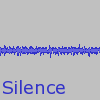
Since my wallet doesn't have blood vessels, one can conclude that echos of blood flow are not the cause of the sound emanating from sea shells. A more plausible explanation is that the shell's cavity is amplifying background noise. Next time I'm in an anechoic chamber I'll bring a shell.
