![[Photograph of Neil Fraser]](neil.jpg)
For the past decade I've been a software engineer at Google. In my spare time I've created a mélange of open-source software. I've also built some rather unusual hardware. On rare occasions I've even been known to write something interesting.
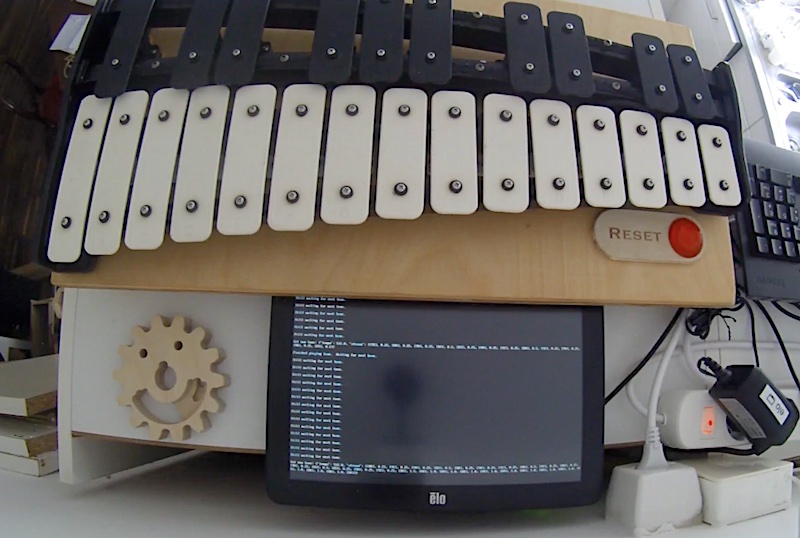
Enjoy this glockenspiel which may be programmed by anyone on the Internet.
I've been working this project on and off over the past three years. The hardware and the software are all open source.
To try it for yourself, go to glockenspiel.appspot.com. For the next week the glockenspiel will be live-streaming from our home. Feel free to play music! Try not to annoy our cat too much.
Update: We had a fun week of live-streaming the glockenspiel. Not long after the stream began someone Rickrolled us. There was a good selection of music played. My fear leading up to this event was how to deal with non-musical spam; say 10,000 of the same note repeated, or 8-note random chords of 1/32 lengths. But everyone was considerate, and nothing like that came up. Instead this is how we woke up on Sunday morning.
Older news: Binocular Caps - 90° Plug - Seven Years - Slides - Archive

![root[at]neil[dot]fraser[dot]name](address.gif)
