


Cursor Keys
31 December 2025
These days nearly all computers feature the familiar 'Inverted-T' pattern of cursor keys. It's so simple and ubiquitous that we forget that it took a long time to settle on this pattern.
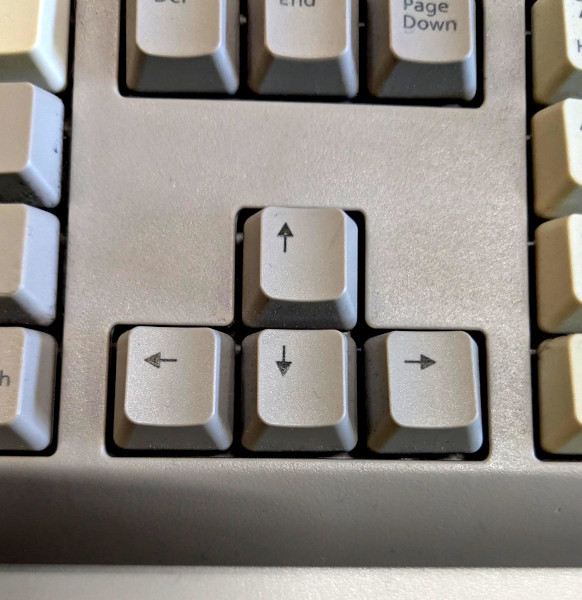
The most obvious pattern is to arrange the cursor keys all four in cardinal directions, like IBM did. Each button is simply in the direction of the arrow. However, this takes up three rows on the keyboard. It also leaves a spot in the center for something (haven't you always wanted a 'Rule' key?).
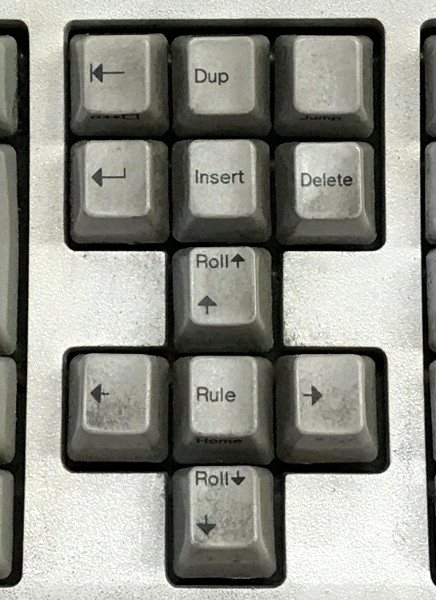
To make the size more manageable, the buttons can be tightened up by making them triangular. However, this involves creating custom non-rectangular button shapes.
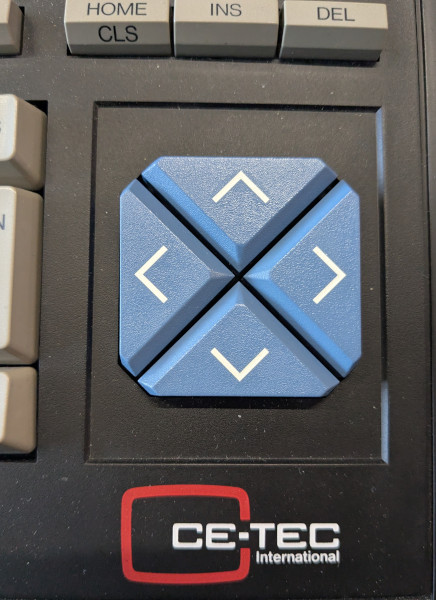
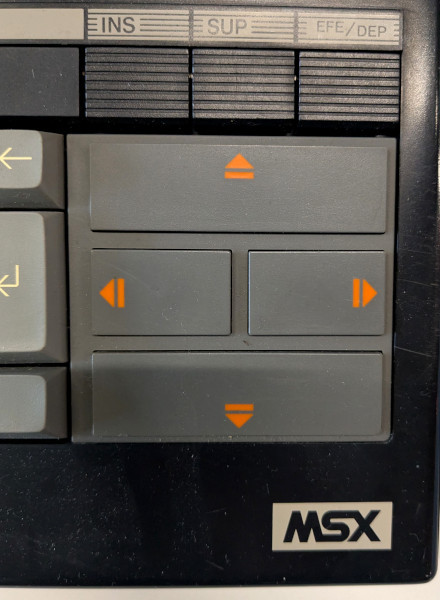
A solution is to simply make the buttons rectangular, but irregular. There are two possible arrangements. The first assumes that left-right will be more commonly used and makes them bigger. The second assumes that up-down will be more commonly used and makes them bigger. As one can see MSX tried both patters.
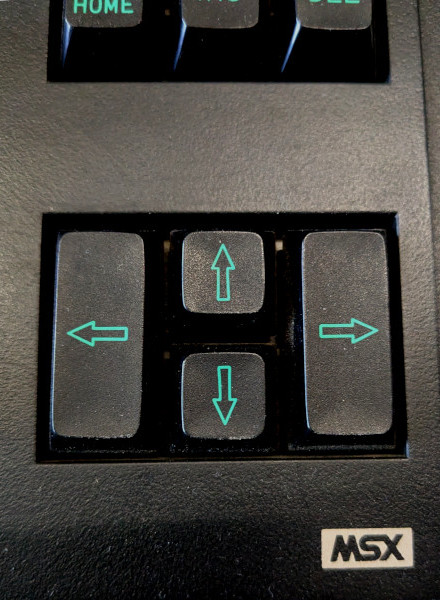
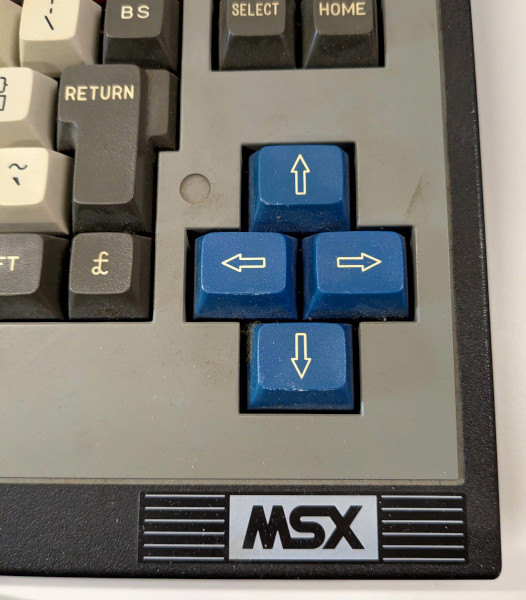
Eventually MSX found a third pattern that used keys that were all identically shaped.
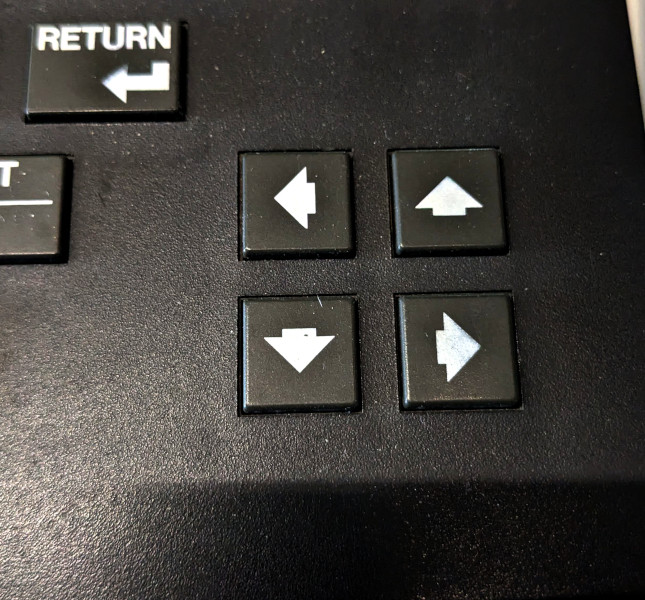
The main problem with the above grid patterns is that they take up a lot of space. So other companies experimented with 2x2 square patterns. Here's one that arranges them in a counter-clockwise Swastika pattern.
Obviously we also had to experiment with a clockwise Swastika.
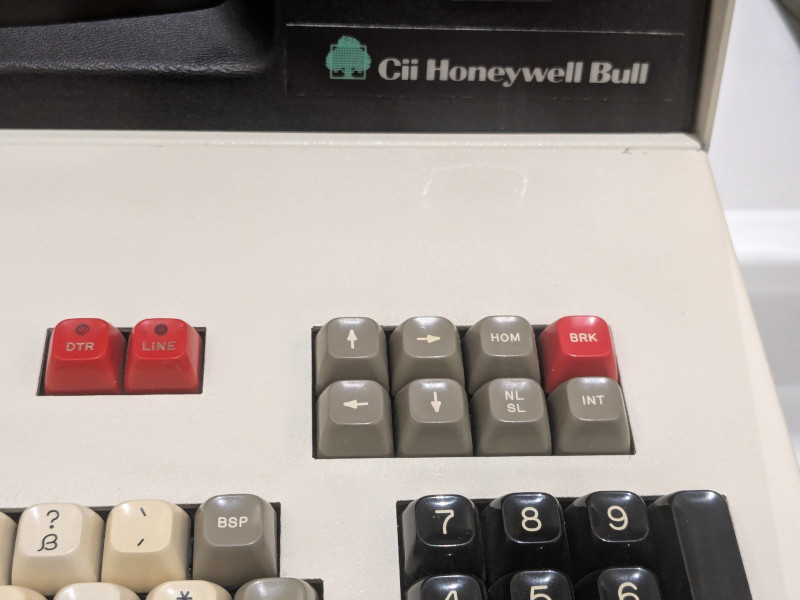
Regardless of direction, these patterns always meant that left-right and up-down would be diagonally opposite from each other. So let's try moving these pairs so that they are beside each other.
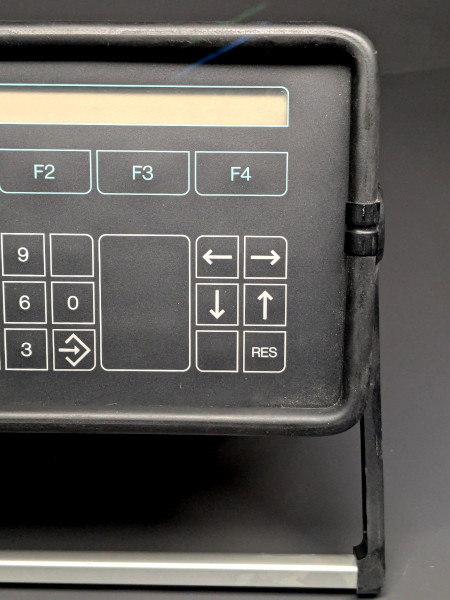
Or we could flip them around and do it the other way.
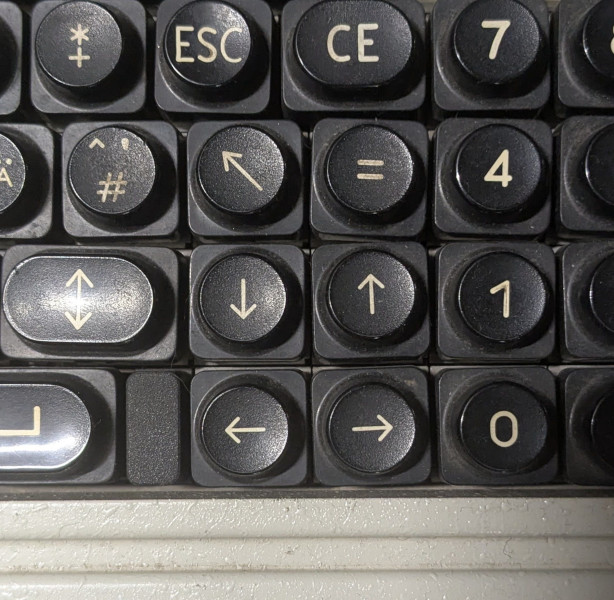
2x2 grids take up a lot of room on the keyboard. What about creating an in-line pattern? up/down/left/right

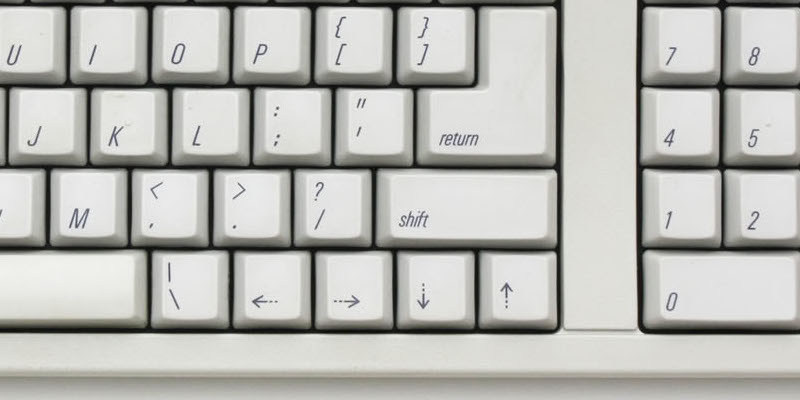
Of course the Macintosh decided to go for a different order: left/right/down/up
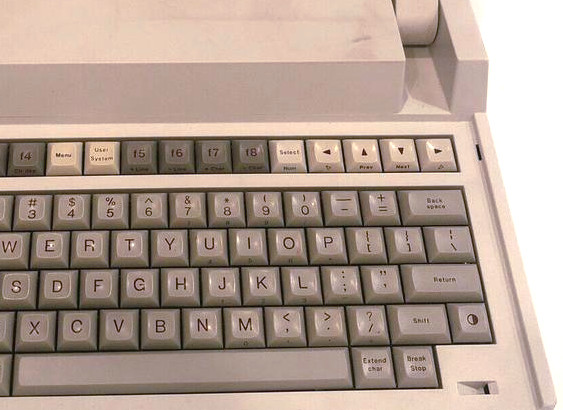
Not to be outdone, the HP 45711 Portable Plus discovered yet another order: left/up/down/right
Radio Shack's Trash-80 went for a two-handed approach with up/down on the left hand, and left/right on the right hand.

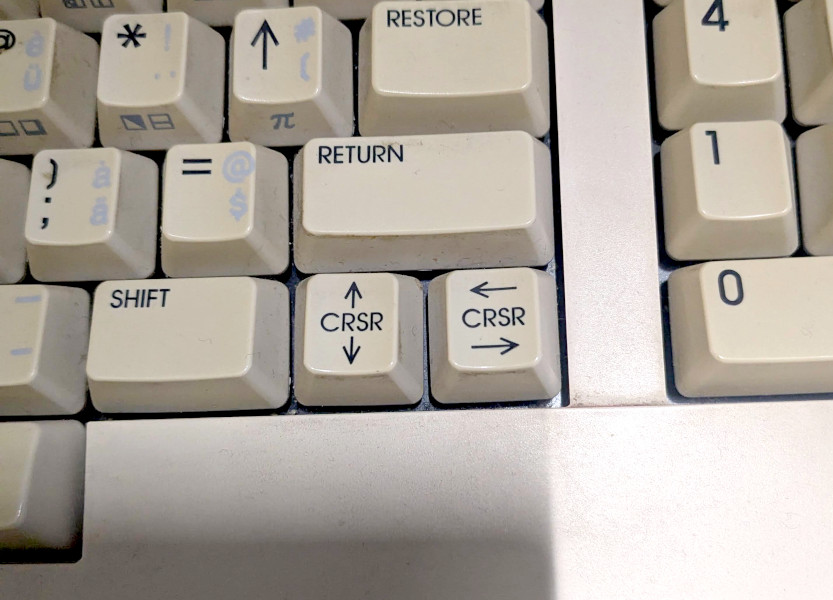
Commodore was able to reduce space and costs by combining two arrow keys with the existing shift key. This produced the most awful arrangement in history: down and right are dedicated keys, while up and left are obtained by holding shift.
The 1980s were a wild time with competing cursor key layouts. Muscle memory was completely shattered every time one changed computers. Ultimately it didn't really matter which pattern won, what mattered was that one of them did.
Most of these keyboards were photographed during the Vintage Computer Festival in Switzerland. I was there demonstrating my robotic glockenspiel. If you have photos of other four-key cursor arrangements and would like to contribute them to this page, I'd be happy to post them.
< Previous | Next >
